

Home Advantage in Sports: How UFC Fighters and Footballers Perform on Home Soil
Understanding Home Advantage in High-Stakes Sports
Athletes across every major sport talk about the power of playing at home. For decades, fans have believed that home turf provides a distinct competitive edge. However, does home advantage in sports work the same way for a team on a football pitch as it does for a fighter inside the Octagon?
In the Premier League, playing in front of tens of thousands of passionate local supporters often lifts a team’s performance. Similarly, UFC events held in cities like London or Manchester create explosive arena atmospheres. Yet, the physical and psychological impact of playing at home can vary significantly between team sports and individual combat sports.
To understand this phenomenon, we must look at how psychology, travel fatigue, and crowd noise affect top-level athletes. While a home crowd can inspire a nervous team, it can also create intense pressure for an individual fighter. Therefore, comparing football and mixed martial arts reveals fascinating truths about modern elite performance.
The Psychology of the Home Crowd
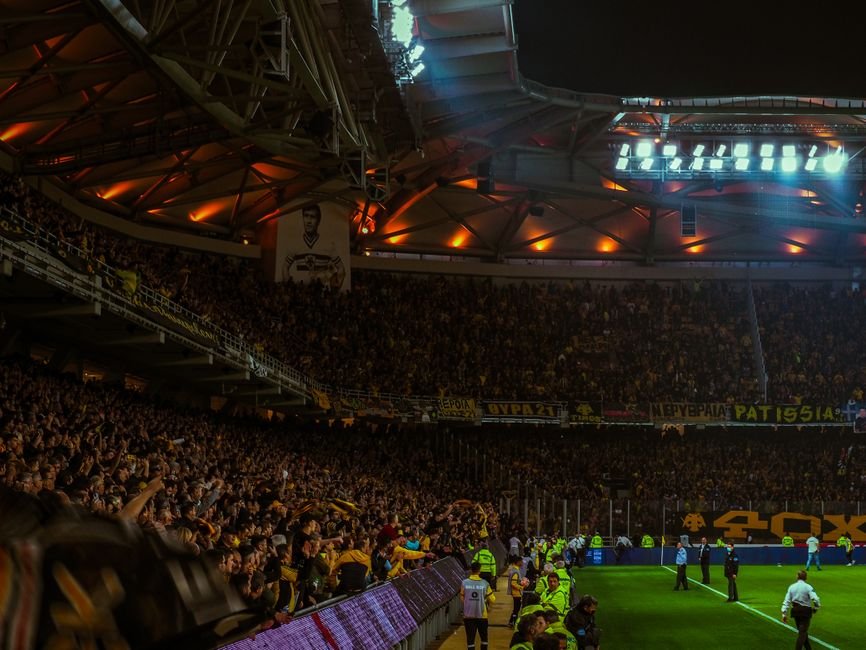
Crowd noise is often considered the biggest factor in home advantage in sports. For example, when 60,000 football fans roar in unison, the energy in the stadium changes instantly. Because team sports rely heavily on momentum, an encouraging crowd can push tired footballers through the final minutes of a match.
Research also shows that passionate crowds can subconsciously influence match officials. In football, referees face immense pressure from local supporters during controversial moments. As a result, home teams historically receive slightly more favourable decisions, such as crucial penalty calls or extra stoppage time.
In contrast, UFC judges sit right beside the Octagon, where crowd noise is equally intense. While judges aim to remain neutral, a cheering crowd can make clean strikes sound more damaging than they actually are. Consequently, an active crowd can sometimes sway close rounds in favour of the local fighter.
How Premier League Clubs Capitalize on Home Pitch Familiarity
Football clubs spend millions of pounds ensuring their home ground offers maximum comfort and familiarity. For instance, teams train regularly on their specific pitch dimensions and grass surfaces. Because every stadium layout differs slightly, subtle details like pitch length or wind patterns offer a real tactical edge.
Furthermore, routine plays a massive role in elite football preparation. Home matches allow players to sleep in their own beds and follow familiar game-day schedules. Because players avoid long journeys, their bodies experience far less physical stress before kick-off.
In short, domestic football travel is relatively straightforward, but visiting teams still face minor disruptions. Staying in hotels and training on unfamiliar pitches can slightly lower an away team’s sharp focus. Over a full season, these small details add up to a measurable home advantage in sports.
The Unique Pressure on UFC Home Fighters
While footballers share the spotlight with ten teammates, a UFC fighter stands entirely alone inside the cage. Therefore, performing in front of a home audience brings a heavy psychological burden. Fans expect a thrilling victory, which can create immense emotional stress during fight week.
Moreover, local fighters face endless media obligations leading up to a home event. Broadcast partners, journalists, and sponsors demand interviews and appearances continuously. As a result, home fighters often struggle to rest properly in the days before competing.
However, when a local fighter enters the arena, the atmosphere can act as a powerful catalyst. The roar of a British crowd at an arena event provides an incredible surge of adrenaline. If a fighter manages their emotions well, this support turns into a major strength.
Travel Fatigue and Time Zone Challenges
Travel is another critical element that shapes home advantage in sports. Premier League teams usually travel across the UK by luxury coach or private train. Consequently, physical weariness from domestic travel remains relatively low for top football clubs.
In contrast, international MMA fighters often endure long-haul flights across multiple time zones. For example, American or Brazilian fighters travelling to the UK for a UFC event must adjust their circadian rhythms rapidly. Flying long distances can disrupt sleep patterns, digestion, and overall physical energy.
Because weight cutting is already physically demanding, travel fatigue makes fight preparation even tougher for visiting athletes. Thus, local UFC fighters benefit greatly simply by avoiding long international flights. Staying near their primary training camp allows them to preserve valuable energy for fight night.
Statistical Differences: Football Teams vs Combat Athletes
Historically, Premier League data shows that home teams win roughly 45% of matches, while away teams win around 30%. Draws account for the remaining results, proving that home teams consistently out胜 their visitors. This steady statistic confirms that home advantage in sports remains a real force in team games.
However, combat sports show slightly more unpredictable outcomes. While local UFC fighters often enjoy strong fan backing, fight records reveal a more balanced win-loss ratio. Because a single punch or submission can end a fight in seconds, crowd energy cannot override a gap in technical skill.
In addition, individual athletes handle pressure differently. Some fighters thrive under intense local scrutiny, while others perform better as hated villains in enemy territory. Therefore, home advantage in mixed martial arts depends heavily on an individual’s personal mindset.
Final Thoughts on Home Soil Performance
Ultimately, home advantage in sports is a real and powerful factor in both football and the UFC. In the Premier League, familiar surroundings, official bias, and crowd momentum give home clubs a structured statistical edge. Footballers benefit from shared responsibility and comfortable matchday routines.
In the UFC, home support brings a thrilling wave of energy, but it also carries serious emotional pressure. While local fighters avoid long travel and jet lag, they must manage overwhelming media noise and high crowd expectations. In combat sports, skill and composure ultimately matter far more than the arena location.
As sports science continues to evolve, both football clubs and MMA camps are working hard to minimize away-from-home disadvantages. Whether on the pitch or inside the cage, mastering the mental side of competition remains the key to victory anywhere in the world.
For more information, https://www.bbc.com.
Related reading

admin
administratorLeave a reply here
Your email address will not be published. Required fields are marked *

One Reply to “Home Advantage in Sports: How UFC Fighters and Footballers Perform on Home Soil”
UFC Referee vs Football Referee: Officiating Compared